The Accidental Discovery That Changed Everything
I still remember the moment I first understood what CRISPR really meant. It was 2:30am, I was three espressos deep into a research binge, and I stumbled across a paper describing how Jennifer Doudna’s team had essentially turned bacteria’s ancient immune system into molecular scissors that could cut DNA with surgical precision. The elegance hit me like a truck. Here was a tool that had evolved over millions of years to protect microbes from viruses, and suddenly we could reprogram it to edit any gene we wanted.
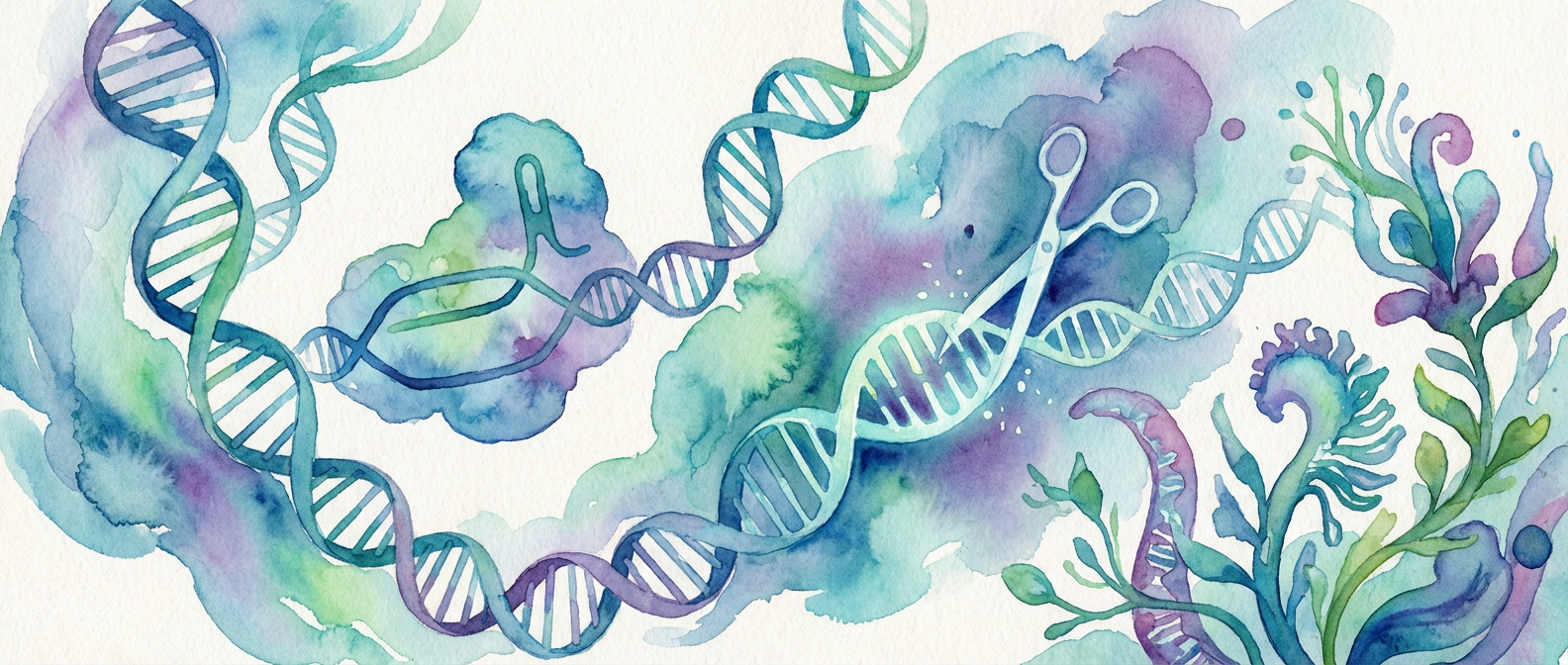
But here’s what makes the CRISPR story so fascinating from a human perspective: it almost didn’t happen. Doudna initially thought her bacterial immunity research was too niche to attract funding. Francisco Mojica, who first identified the repetitive DNA sequences that would eventually be called CRISPR, spent years convincing colleagues that these strange bacterial patterns were worth studying. Emmanuelle Charpentier was working on Streptococcus infections when she realized the potential. None of them set out to revolutionize medicine, yet their curiosity about seemingly obscure biological mechanisms opened a door that can never be closed.
Today, just over a decade after that first landmark 2012 paper, CRISPR labs are some of the most chaotic spaces in modern science. These aren’t the sterile, quiet research environments you might imagine. They’re buzzing with graduate students debating ethics over late-night pizza, postdocs troubleshooting guide RNA sequences on whiteboards covered in illegible equations, and principal investigators frantically preparing for FDA meetings that could determine whether their work reaches patients within years or decades.

Beyond the Headlines: What CRISPR Scientists Are Really Working On
The media loves to talk about “designer babies” and superhuman enhancement, but spend time in actual CRISPR labs and you’ll find researchers focused on far more immediate challenges. David Liu’s team at the Broad Institute has developed base editors that can make single-letter changes to DNA without creating double-strand breaks. It sounds technical, but this approach could potentially cure sickle cell disease by changing just one nucleotide in the beta-globin gene. Fyodor Urnov at UC Berkeley is working on inherited blindness, using CRISPR to edit genes directly in patients’ eyes.
What strikes me most about these researchers is their methodical approach to safety. Every conversation I’ve had with CRISPR scientists eventually turns to off-target effects, delivery mechanisms, and immune responses. They’re acutely aware that one poorly executed clinical trial could set the entire field back by decades. When I visited Jennifer Hamilton’s lab at UCSF, she showed me their quality control protocols for manufacturing guide RNAs. The level of redundancy and testing would make aerospace engineers proud.
The technical challenges are staggering. Getting CRISPR into the right cells remains one of the biggest hurdles. Some teams are engineering viral vectors, others are developing lipid nanoparticles, and a few brave souls are working on direct injection methods. Each approach has trade-offs in terms of efficiency, safety, and cost. The researchers working on these delivery problems might not get Nobel Prizes, but they’re solving the engineering challenges that will determine whether CRISPR becomes a routine medical tool or remains confined to specialized treatment centers.
The Culture of Collaboration and Competition
CRISPR has created an unusual scientific culture that blends fierce competition with remarkable openness. The Addgene plasmid repository has become a central hub where researchers freely share their latest CRISPR constructs. I’ve watched scientists who are technically competitors spend hours on Twitter helping each other troubleshoot experimental protocols. When the COVID pandemic hit, multiple CRISPR teams immediately pivoted to developing rapid diagnostic tests, sharing data in real-time through preprint servers.
Yet the competitive pressures are real. Patent battles continue to rage over fundamental CRISPR technology, with billions of dollars at stake. Academic labs race to publish first, while biotech companies sprint toward clinical trials. The scientists I’ve interviewed navigate this tension with remarkable grace, maintaining scientific integrity while operating in an environment where timing can determine whether discoveries lead to academic glory or commercial success.
The international dimension adds another layer of complexity. Chinese researchers like He Jiankui’s controversial germline editing experiments cast a shadow over the entire field, leading to increased scrutiny and calls for international oversight. Meanwhile, European researchers operate under different regulatory frameworks than their American counterparts, creating a patchwork of rules that affects everything from research priorities to patient access to experimental treatments.
The Next Frontier: Prime Editing and Beyond
The most exciting developments happening right now involve technologies that build on CRISPR’s foundation but push far beyond simple gene knockout. Prime editing, developed by David Liu’s team in 2019, can insert, delete, or replace DNA sequences with minimal off-target effects. Early results suggest it could correct up to 89% of known disease-causing mutations. When I first read their Nature paper, I had to put down my coffee and read certain paragraphs three times. The precision was unlike anything we’d seen before.
Epigenome editing represents another frontier that’s particularly fascinating from a research perspective. Rather than changing DNA sequences, these approaches modify the chemical tags that control gene expression. Alexandro Teixeira’s work on reversible gene silencing could allow doctors to temporarily turn off disease-causing genes without permanent genetic changes. The implications for treating conditions like Huntington’s disease or certain cancers are profound.
Base editing continues to evolve rapidly. New cytosine and adenine base editors are becoming more efficient and precise with each iteration. Some researchers are working on dual base editors that can make multiple types of changes simultaneously. Others are developing miniaturized versions that can fit into smaller delivery vectors. The pace of innovation in this space leaves me dizzy, with major advances appearing in top journals every few months.
Looking Forward: Challenges and Possibilities
Perhaps the most interesting aspect of contemporary CRISPR research is how it’s pushing scientists to think systemically about biology. Rather than focusing solely on single-gene disorders, researchers are beginning to tackle complex diseases involving multiple genetic factors. Polygenic disorders like diabetes, heart disease, and psychiatric conditions might eventually become treatable through coordinated edits across multiple genes.
The regulatory landscape continues to evolve in real-time. The FDA has approved several CRISPR therapies for clinical trials, including treatments for sickle cell disease and certain cancers. European regulators are taking a more cautious approach, particularly regarding germline editing. These policy decisions will fundamentally shape which applications of CRISPR reach patients first and which remain in research laboratories.
What keeps me optimistic about this field is the quality of people attracted to CRISPR research. These are scientists who could easily pursue safer, more predictable research directions, yet they choose to work on problems that might take decades to solve. They’re driven by the possibility of eliminating genetic diseases that have plagued humanity for millennia. That level of scientific ambition, combined with increasingly sophisticated tools and growing public support, suggests we’re still in the early stages of the CRISPR revolution.
The next few years will likely bring the first FDA approvals for CRISPR therapies, marking the transition from promising technology to routine medicine. If you’re as fascinated by these developments as I am, I’d love to hear about research papers or clinical trials that have caught your attention. The pace of discovery in this field means there’s always something new to discuss, and often the most interesting insights come from readers who spot connections I’ve missed.