A Precision Edit That Changes Everything
In January 2025, researchers published results from a clinical trial that stopped me mid-scroll at 2 a.m. The data came through the New England Journal of Medicine, and the headline numbers were almost too clean to be real: 97% of sickle cell patients treated with Beam Therapeutics’ BEAM-101 therapy achieved transfusion independence after one year. No transfusions. No chronic pain crises. One genetic therapy, one treatment window, lasting results. But here’s where the story gets complicated, and where the gap between “medically remarkable” and “available at your hospital” becomes a chasm worth understanding.
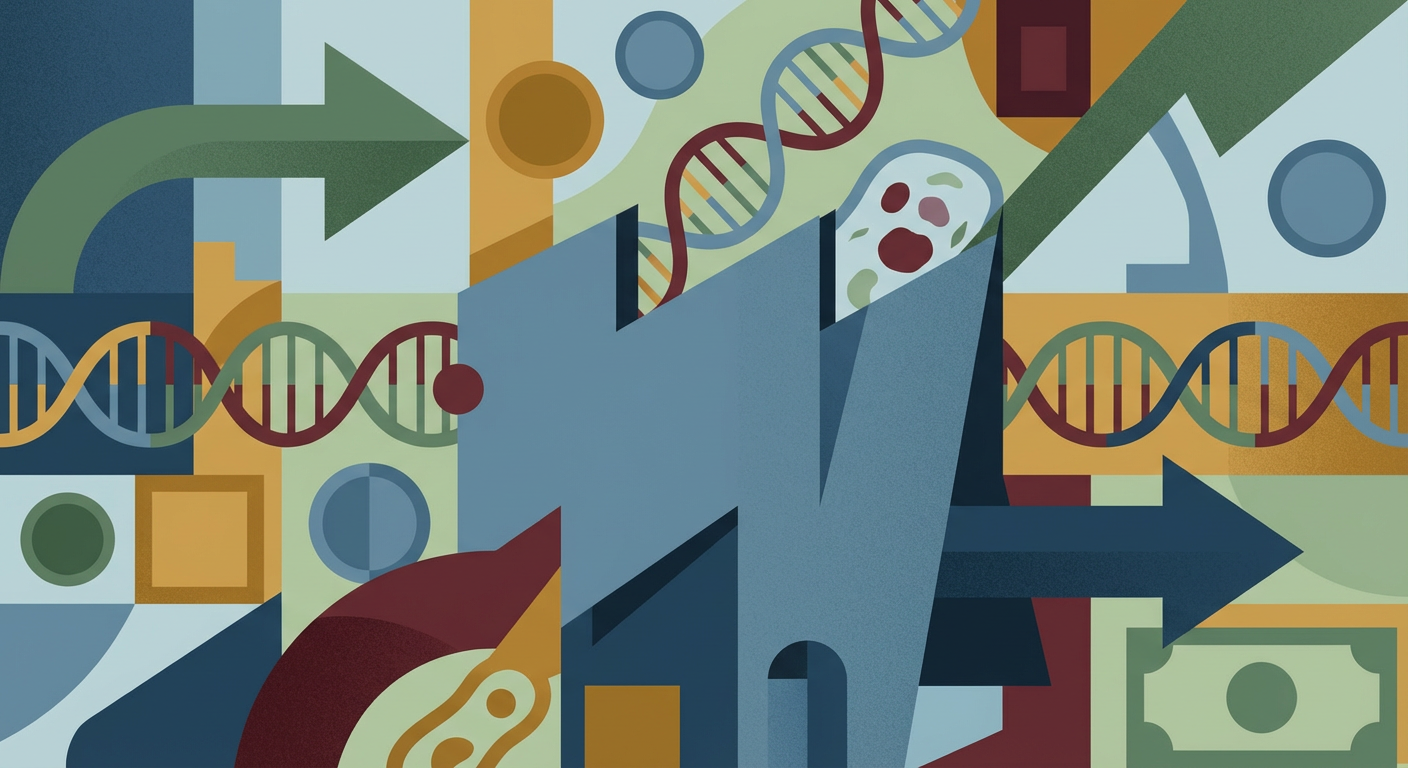
The mechanism behind this success isn’t standard CRISPR. This is where base editing enters the conversation, and it matters more than you might initially think. Traditional CRISPR-Cas9, the earlier generation that captured public imagination, works by creating breaks in both strands of the DNA double helix. It’s effective but messy—like editing a document by cutting and pasting entire paragraphs. Base editing, by contrast, performs single-letter changes to the genetic code without triggering those double-strand breaks. According to researchers at the Broad Institute, this architectural difference reduces off-target editing risks by roughly 90% compared to conventional CRISPR approaches. Your cells are editing with a scalpel instead of a saw.
Understanding What the Trial Actually Measured
Let’s talk specifics, because precision language matters when we’re discussing human health outcomes. The trial measured transfusion independence at the 12-month mark. For context, sickle cell patients typically endure multiple blood transfusions annually to manage their disease, and some receive them monthly. Transfusion dependence drives not just the immediate suffering but cumulative iron overload, blood type sensitization, and a cascade of secondary complications. Achieving independence from this cycle represents a fundamental shift in disease burden.
The 97% figure isn’t marketing gloss. It’s a remarkably high response rate for a single-dose genetic intervention in a Phase 2b trial. Most gene therapies show efficacy rates in the 70-85% range. The fact that nearly all participants experienced meaningful clinical benefit suggests the approach is hitting its biological target consistently. But here’s what I always remind myself when reading these results: Phase 2b trials are specifically designed to detect efficacy in optimal settings with carefully selected patient populations. The real world, with its complications and variables, will tell a different story eventually.
What wasn’t reported yet are the durability questions. Will this 12-month response persist at year three, year five, year ten? That data simply doesn’t exist because the patients haven’t lived with the treatment that long. We’re watching a story still being written.
Base Editing vs. Conventional CRISPR: Why the Difference Matters
If you’ve been following CRISPR stories for the past five years, you’ve probably absorbed the narrative that it’s a universal tool. The reality is more complicated than that. Base editing is an evolution, not a replacement, and it’s refined specifically for certain genetic diseases.
In sickle cell disease, the problem is a single nucleotide change: a glutamic acid codon mutates to valine, which causes hemoglobin to polymerize under low oxygen. Base editing can target that exact letter swap without generating the DNA damage that comes with standard CRISPR cutting. This reduces the activation of the cell’s emergency response mechanisms and, theoretically, lowers the probability of unwanted mutations elsewhere in the genome. The reduced off-target editing risk isn’t just a technical win. It’s a safety win that could matter decades down the line when we’re monitoring patients for secondary cancers or other complications.
The downside? Base editing isn’t universally applicable. It works beautifully for single-nucleotide problems but struggles with larger deletions or insertions. For some genetic diseases, conventional CRISPR remains the better approach. There’s no universal tool here, just better tools for specific jobs.
The Regulatory Fast Lane and the Access Bottleneck
In mid-2024, the FDA granted BEAM-101 Breakthrough Therapy Designation, which accelerated its regulatory pathway significantly. This isn’t trivial bureaucracy. It compresses years of review into a faster timeline, theoretically bringing the therapy to patients sooner. Beam Therapeutics BEAM-101 Clinical Trial Data showed promising phase results that warranted this expedited status. The designation signals regulatory confidence in both the evidence and the unmet medical need.
And there absolutely is an unmet need. Approximately 100,000 people in the United States live with sickle cell disease, with roughly 8 million affected globally. Sub-Saharan Africa accounts for about 75% of all annual births with the condition, creating a staggering global disease burden concentrated in regions with the least healthcare infrastructure.
Here’s where the story becomes difficult. Beam Therapeutics hasn’t publicly announced pricing for BEAM-101, but the existing gene therapy landscape provides a grim forecast. Casgevy, approved in 2023 for sickle cell and beta-thalassemia, carries a one-time treatment cost of approximately $2.2 million per patient. Two point two million dollars. For one treatment. The World Health Organization flagged these access equity concerns in a January 2025 advisory, essentially noting that we’ve created medical miracles that most of humanity cannot afford. The mathematics here are brutal: even if BEAM-101 works in 97% of patients, it remains out of reach for the 95% of sickle cell patients living outside wealthy countries.
The Gap Between “Approved” and “Available”
Even if BEAM-101 receives FDA approval within the next 18 months, your local hospital won’t suddenly start offering it. Gene therapies require specialized infrastructure, trained geneticists, long-term patient monitoring protocols, and often weeks of patient preparation. Insurance companies will need to establish coverage pathways. Clinicians will need training. The supply chain will need to scale from single-digit trial batches to hundreds of doses annually. These logistical realities are challenging enough in wealthy healthcare systems and exponentially harder everywhere else.
There’s also the question of patient selection. Sickle cell disease is heterogeneous. Some patients have mild disease, others devastating severity. Determining who benefits most from a $2 million one-time therapy versus supportive care or other existing approaches requires careful clinical judgment and access to comprehensive genetic and phenotypic data. In regions where basic hematology labs are scarce, this precision medicine calculus becomes almost impossible.
The 97% remission rate is genuinely remarkable. It represents years of fundamental biochemistry, engineering biology, and clinical courage. But between a promising clinical trial and a transformed standard of care lies a landscape of regulatory, manufacturing, financial, and equity challenges that dwarf the scientific achievement itself. That gap is where most of medicine actually lives, not in the elegant clarity of a Nature paper, but in the messy reality of implementation.
What questions are you tracking about base editing and gene therapy access? The science is moving fast, but the policy infrastructure hasn’t caught up. New England Journal of Medicine – Gene Therapy for Sickle Cell published the full trial data if you want to explore the methodology and results yourself. I’d love to hear what you find most compelling or concerning about where this all leads.