The Living Circuit Board Revolution
Picture this: bacteria that literally glow when they detect landmines, yeast that churns out life-saving medications, and algae engineered to eat carbon dioxide and excrete jet fuel. This isn’t science fiction anymore. It’s synthetic biology, and it’s quietly revolutionizing everything from medicine to manufacturing to environmental cleanup. While you were scrolling through social media last night, researchers in labs across the globe were programming cells like software engineers code apps.
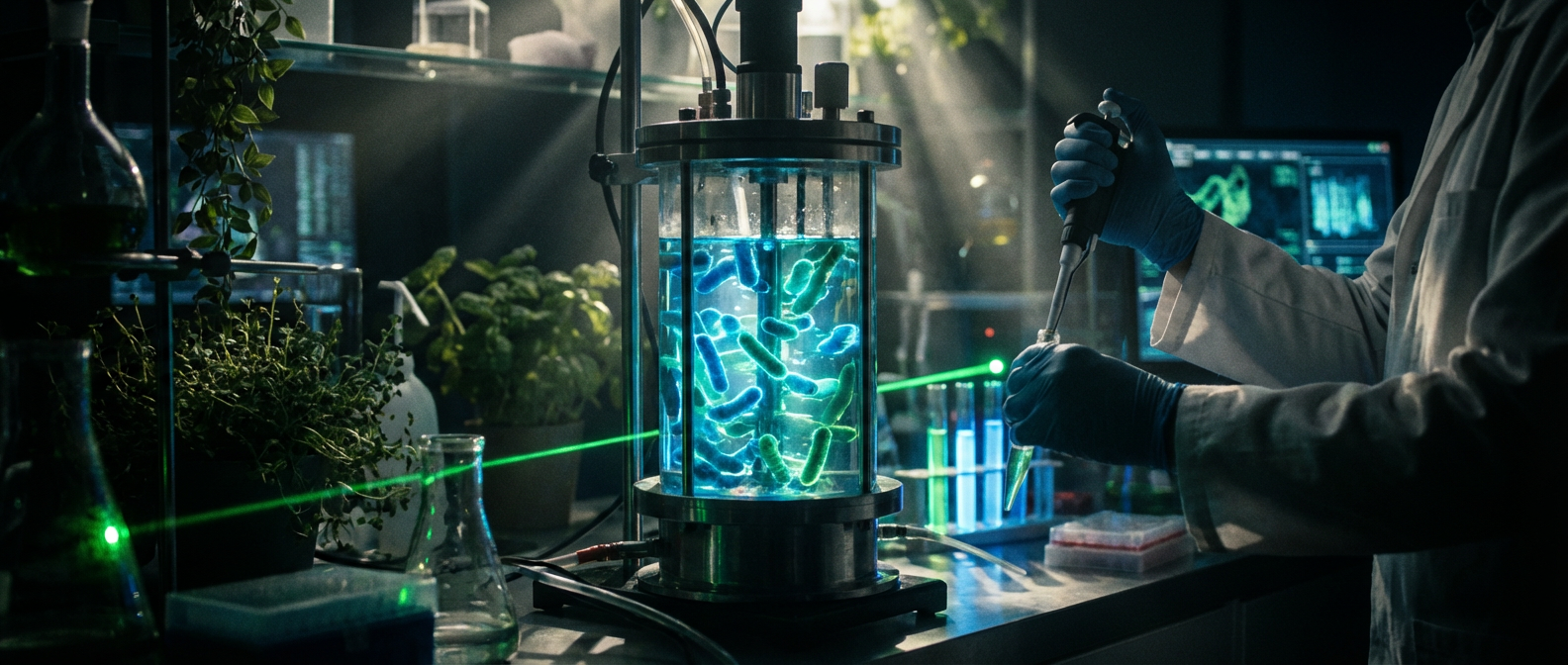
Synthetic biology combines engineering principles with biological systems, but it’s way more radical than traditional genetic engineering. Instead of just moving genes between organisms, synthetic biology builds entirely new biological parts, devices, and systems from scratch. It’s the difference between renovating a house and designing one from the ground up using modular components. The standardization of biological parts has created what researchers call BioBricks, which are basically interchangeable genetic components that can be mixed and matched like LEGO blocks to create custom cellular functions.
The numbers alone tell you this field is exploding. The synthetic biology market was worth about $16 billion in 2022 and is projected to hit $85 billion by 2032. But honestly, the economic indicators are just the surface level. What’s really exciting is how many different problems we can tackle with this technology. We’re watching the birth of a new industrial revolution, one written in DNA rather than steel.

Medicine Gets a Programmable Makeover
The pharmaceutical industry has become synthetic biology’s most visible testing ground, and for good reason. Traditional drug discovery takes 10-15 years on average and costs billions of dollars, with a failure rate that would destroy most industries. Synthetic biology is completely changing those economics by turning living cells into tiny pharmaceutical factories.
Take artemisinin, a crucial antimalarial drug that’s traditionally extracted from sweet wormwood plants. Sanofi partnered with biotech company Zymergen to engineer yeast that produces artemisinin precursors, creating a stable supply chain that doesn’t depend on unpredictable agricultural conditions. The engineered yeast cranks out the drug compound in large fermentation tanks, cutting costs dramatically and ensuring consistent availability for malaria treatment programs in developing countries.
But the real game-changer is personalized medicine through engineered immune cells. CAR-T cell therapy, already approved for certain blood cancers, is just the starting point. Researchers are developing synthetic biology approaches to create “smart” immune cells that can be programmed to recognize specific disease signatures, activate only in diseased tissue, or coordinate complex therapeutic responses. Recent advances in synthetic gene circuits allow these engineered cells to process multiple inputs at once, making treatment decisions based on the cellular environment they encounter.
The possibilities go way beyond cancer treatment. Scientists are engineering bacteria to live in the human gut and continuously produce therapeutic compounds for chronic diseases like diabetes or inflammatory bowel disease. These “living therapeutics” could provide sustained treatment with fewer side effects than traditional pharmaceuticals, completely changing how we think about medication delivery.
Feeding the World Through Cellular Agriculture
While medical applications grab headlines, synthetic biology’s potential to revolutionize food production might be even more transformative. The global population is expected to reach 9.7 billion by 2050, requiring a 70% increase in food production on basically the same amount of farmable land. Synthetic biology offers multiple ways to meet this challenge.
Cellular agriculture, growing animal products without animals, has moved from lab experiment to commercial reality. Companies like Perfect Day have engineered yeast to produce dairy proteins identical to those found in cow’s milk, creating ice cream and cheese that tastes exactly like traditional dairy products but requires 97% less land and generates 91% fewer greenhouse gas emissions. The process involves inserting cow genes for specific milk proteins into yeast cells, which then produce these proteins during fermentation.
Plant-based innovations are equally impressive. Impossible Foods engineered yeast to produce heme, the iron-containing molecule that gives meat its distinctive flavor and appearance. Meanwhile, researchers are developing crops with enhanced nutritional profiles through synthetic biology approaches. Golden Rice 3.0, engineered to produce significantly higher levels of beta-carotene than earlier versions, could address vitamin A deficiency affecting millions of children worldwide.
The technology is also enabling completely new food categories. Scientists have successfully engineered microorganisms to produce everything from vanilla flavoring to egg proteins, creating production systems that are faster, more consistent, and less vulnerable to climate change than traditional agriculture. Some researchers are even working on engineering photosynthetic bacteria that could grow in controlled environments using only sunlight and carbon dioxide, potentially enabling food production in space or extreme terrestrial environments.
Climate Solutions Written in Genetic Code
Maybe nowhere is synthetic biology’s potential more urgent than in addressing climate change. Traditional approaches to carbon capture and environmental cleanup are often energy-intensive and expensive. Biological systems, refined through millions of years of evolution, offer elegant solutions that work at room temperature and pressure using renewable energy sources.
Carbon capture through engineered organisms is one of the most promising applications. Companies like LanzaTech have developed bacteria that consume carbon monoxide and carbon dioxide from industrial waste streams, converting these greenhouse gases into useful chemicals like ethanol and acetone. Their process has been deployed at steel mills and chemical plants, turning waste carbon into valuable products while reducing emissions.
Ocean applications show equally exciting potential. Researchers are engineering marine microorganisms to capture carbon more effectively than natural processes. Some approaches involve enhancing the ability of phytoplankton to fix carbon dioxide, while others focus on engineering bacteria that can break down ocean plastic pollution into harmless compounds. Recent breakthroughs in plastic-eating enzymes have led to bacteria capable of completely breaking down PET plastic bottles in hours rather than centuries.
Biofuel production through synthetic biology has evolved far beyond early ethanol applications. Advanced biofuels, including those that can directly replace jet fuel or diesel, are being produced by engineered microorganisms that convert agricultural waste or even atmospheric carbon dioxide into sophisticated hydrocarbon fuels. These approaches offer carbon-neutral alternatives to fossil fuels without competing with food crops for agricultural land.
Navigating the Promises and Perils Ahead
The rapid advancement of synthetic biology brings both unprecedented opportunities and significant challenges that deserve serious consideration. Safety concerns around genetically modified organisms have evolved into more complex questions about engineered biological systems that might behave unpredictably in natural environments. Keeping engineered organisms contained and preventing unintended ecological consequences requires robust regulatory frameworks that are still being developed.
Economic disruption is another major consideration. As synthetic biology enables the production of traditional agricultural or pharmaceutical products through engineered microorganisms, entire industries and regional economies built around conventional production methods face potential displacement. The transition requires thoughtful policies to support affected communities while enabling beneficial innovations.
Equity and access issues loom large as well. The most transformative synthetic biology applications often require sophisticated infrastructure and expertise, potentially making global inequalities worse rather than better. Making sure that benefits reach populations most in need of improved food security, healthcare, and environmental solutions demands intentional effort from researchers, policymakers, and funding organizations.
But the potential benefits are too significant to ignore. We’re at the threshold of an era where biological systems can be engineered as precisely as electronic circuits, offering solutions to humanity’s most pressing challenges. The question isn’t whether synthetic biology will reshape our world, but how quickly we can develop it responsibly and deploy it effectively. Every research paper published, every successful trial completed, and every regulatory framework established brings us closer to a future where biology itself becomes our most powerful technology platform.