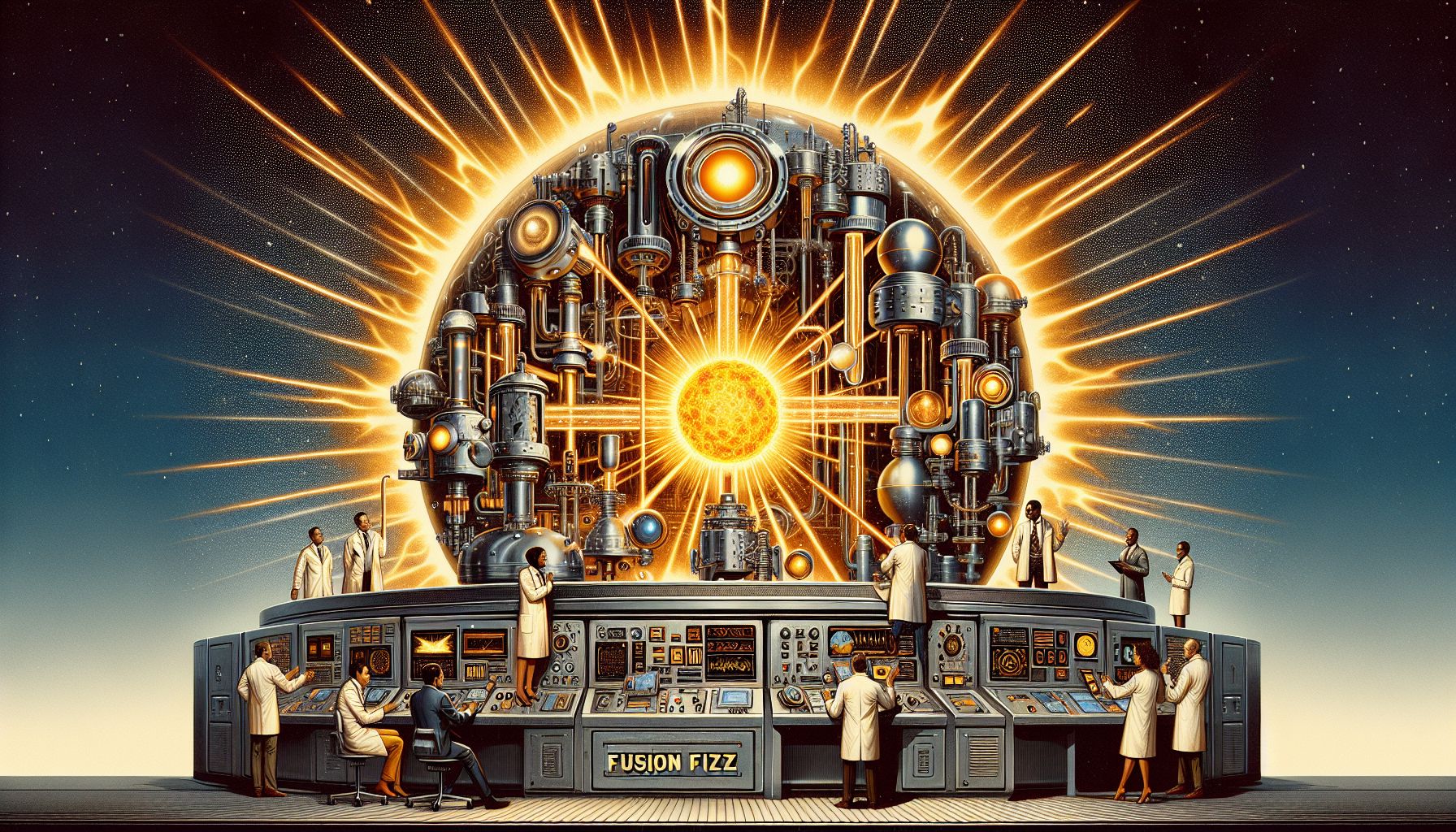
Hey tech fam! Buckle up because today we’re diving into a tech-heavy topic that’s not only mind-blowing but also could completely change how we think about energy. I’m talking about nuclear fusion, the thing scientists have been chasing for decades that could make your hydro bill as obsolete as a floppy disk. Unlike its chaotic cousin fission, which splits atoms, fusion is all about merging them. Think of it like the difference between a messy divorce and a fairytale wedding. Except, in this case, the guests get clean, limitless energy.
The Science of Star Power
So, what’s the big deal with nuclear fusion? Well, for starters, it’s the process that powers our sun and every other star in the universe. The light we see here on Earth is essentially star burps of energy created when hydrogen atoms get cozy and fuse to form helium. This union releases massive amounts of energy, far more than current nuclear plants, without the hazardous radioactive waste or meltdown nightmares.
Here on terra firma, the fusion game is less ‘snap your fingers’ and more ‘herding cats’. We’ve been trying to recreate those conditions but let’s just say it’s a smidge more complicated than assembling IKEA furniture. The key lies in achieving the optimal “hotter-than-the-sun” conditions, where atoms can collide with enough force to overcome their natural repellent tendencies. It’s like a cosmic get-together where everyone sheds their inhibitions. But without the sangria.
Making Fusion a Reality
Recent developments have really cranked the excitement dial up to eleven. In late 2022, the team over at the National Ignition Facility (love a catchy name) reached a big milestone, achieving a “net gain” in energy for the very first time. This is geek-speak for “we got more energy out of the reaction than we put in,” a huge step forward from previous experiments. Finally, fusion broke even! Who knew atoms had such a strong sense of fiscal responsibility?
Meanwhile, The European fusion project, ITER, in sunny southern France is building a magnetic “tokamak” device the size of an auditorium with high hopes it’ll keep plasma stable long enough to generate viable energy. It’s like a colossal espresso machine, but instead of waking you up, it powers the grid.
Then there’s private-sector ingenuity. Companies like Commonwealth Fusion Systems and TAE Technologies have raised eyebrows and billions in investment capital, each betting on competing approaches to harness fusion. They’re like Silicon Valley startups, but instead of apps that order pizza with pineapple (it’s a niche market, okay?), they’re working towards global energy independence.
Fusion: Friend or Faux?
Not to play devil’s advocate at our little futuristic pep rally, but fusion isn’t without its hiccups. For starters, the engineering challenge alone is massive. Containing plasma at temperatures hotter than the sun requires insanely strong magnetic fields, constructed from materials that can take a hell of a beating. Screw-ups could spell trouble, though thankfully not the “oops, there goes Hiroshima” kind.
And don’t even talk to me about the cost. Sure, prices always drop as tech matures (I’m looking at you, early ’80s VCRs), but fusion requires big bucks upfront. We’re talking government-level pockets, or what I like to call the “Jeff Bezos vacation fund.”
Then there’s the timeline. The proverbial carrot has always been dangled 30 years into the future, perpetually recalibrating as we inch closer. So, will we see viable fusion energy powering our homes by the 2050s? Maybe. Will we achieve it sooner? Unlikely, unless someone comes up with a wizard wand or a sci-fi blueprint.
A Blazing Future
Now, leaning into some blue-sky thinking, the benefits of nuclear fusion could be pretty darn utopian. Clean, limitless energy would drastically reduce carbon emissions, curb climate change, and alleviate global energy inequalities. Imagine large-scale desalination plants turning deserts green or high-speed electric railways spanning continents, all powered by our artificial sun. Granny’s beach house in the Sahara, here we come!
And, there’s always the possibility that fusion might become the backbone powering futuristic tech. Interstellar travel, say? Picture fusion engines hurtling the first manned missions to Mars, thereby turning Elon Musk’s Twitter-propelled thoughts into intergalactic deeds.
That said, fusion isn’t a magic bullet. It’s not going to solve all of humanity’s problems overnight. Yet, as an example of human ingenuity, it is an incredible leap forward. It’s as if Apollo and Prometheus teamed up, swapping their lyres for lab coats, all to gift humanity endless, squeaky-clean power.
Here’s hoping the sun continues to inspire us as both muse and model. I’m rooting for fusion to become the headline act of the 21st century’s energy playlist. Until then, I’ll keep my eye on the news and fingers crossed for no nuclear hangovers. Peace, light, and limitless fusion dreams to you all!
Catch you on the flip side, where atoms really know how to party!