Living in the Age of Incomprehensible Scale
Here’s something that kept me awake last night until about 3 AM: the ocean covers roughly 71% of Earth’s surface, and we have mapped and explored less than 20% of it with any meaningful resolution. The number alone doesn’t quite capture the vertigo-inducing scale. We’re talking about approximately 335 million square kilometers of relatively uncharted territory on our own planet. That’s larger than all the continents combined. That’s like saying we know the layout of someone’s living room but nothing about the other 80% of their mansion.
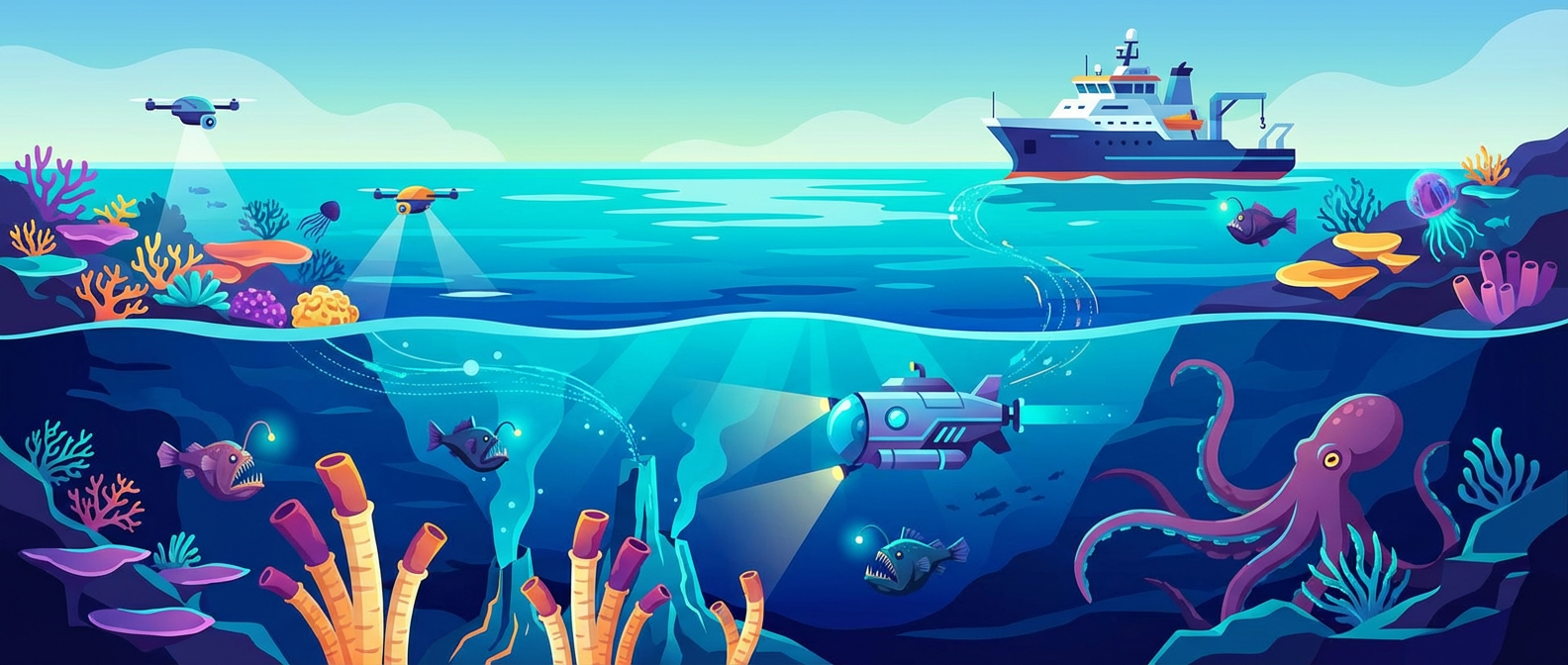
The problem isn’t that we lack curiosity or funding entirely. The problem is scale itself. The ocean’s average depth is 3,688 meters. The deepest point, the Challenger Deep in the Mariana Trench, plunges to nearly 11 kilometers below the surface. When you stack that vertical dimension on top of the horizontal vastness, you begin to grasp why even our best efforts feel like trying to understand a forest by examining a few trees near the entrance. The volume of water we’re talking about is so enormous that it almost becomes abstract. There are approximately 1.335 billion cubic kilometers of ocean water. Our collective human exploration efforts, despite centuries of seafaring tradition, amount to a few careful pokes at the edges of this incomprehensible expanse.
Technology Finally Catches Up to Ambition
What’s genuinely exciting right now is that autonomous underwater vehicles (AUVs) are transforming what’s possible. These aren’t remote-operated submersibles tethered to surface ships with limited reach and staggering operational costs. These are intelligent robots that can descend, map, collect samples, and transmit data with increasing independence. The speed of discovery has accelerated dramatically because we’ve finally developed tools that can work at scale. A single AUV mission can cover more seafloor in days than a human-crewed submersible could in months. The cost economics are shifting too, which means more institutions can participate, and research that would have been prohibitively expensive ten years ago is becoming routine.
The consequences are already visible. Around 2,000 new marine species are formally described each year from deep ocean surveys, and this rate hasn’t plateaued. These aren’t discoveries of slightly different-looking fish species either. We’re talking about entirely novel biological architectures: extremophile organisms thriving near hydrothermal vents at temperatures that would cook most life, chemosynthetic ecosystems that don’t depend on photosynthesis at all, creatures with body plans so unexpected that they expand our fundamental understanding of what life can be. Organizations like MBARI ocean research have been instrumental in developing and deploying these autonomous systems, and their databases represent some of the most comprehensive deep-sea biological records we have.
The Paradox of Exploration in the Anthropocene
This is where my 3 AM excitement curdles into something closer to dread. We’re discovering the deep ocean’s secrets at precisely the moment when human activity is actively degrading it. The pace of ocean acidification is the fastest documented in at least 300 million years of paleoclimate records. That’s not hyperbole from an activist perspective. That’s what the carbonate chemistry of the water column is telling us. The ocean absorbs roughly 25% of our atmospheric carbon dioxide emissions, which sounds beneficial until you understand what that does to pH levels and the chemistry of carbonate minerals that countless organisms depend on for shells and skeletons.
And then there’s the matter of plastic. Deep sea researchers have documented microplastics and larger plastic debris in the Mariana Trench itself, at depths exceeding 11 kilometers, since 2019. This represents our species’ achievement of thoroughly contaminating the most isolated, seemingly unreachable environment on the planet. The plastic we casually discard on land ends up filtering through the entire ocean ecosystem, accumulating in creatures that have never evolved any ability to process synthetic materials.
Mining the Mystery Before We Understand It
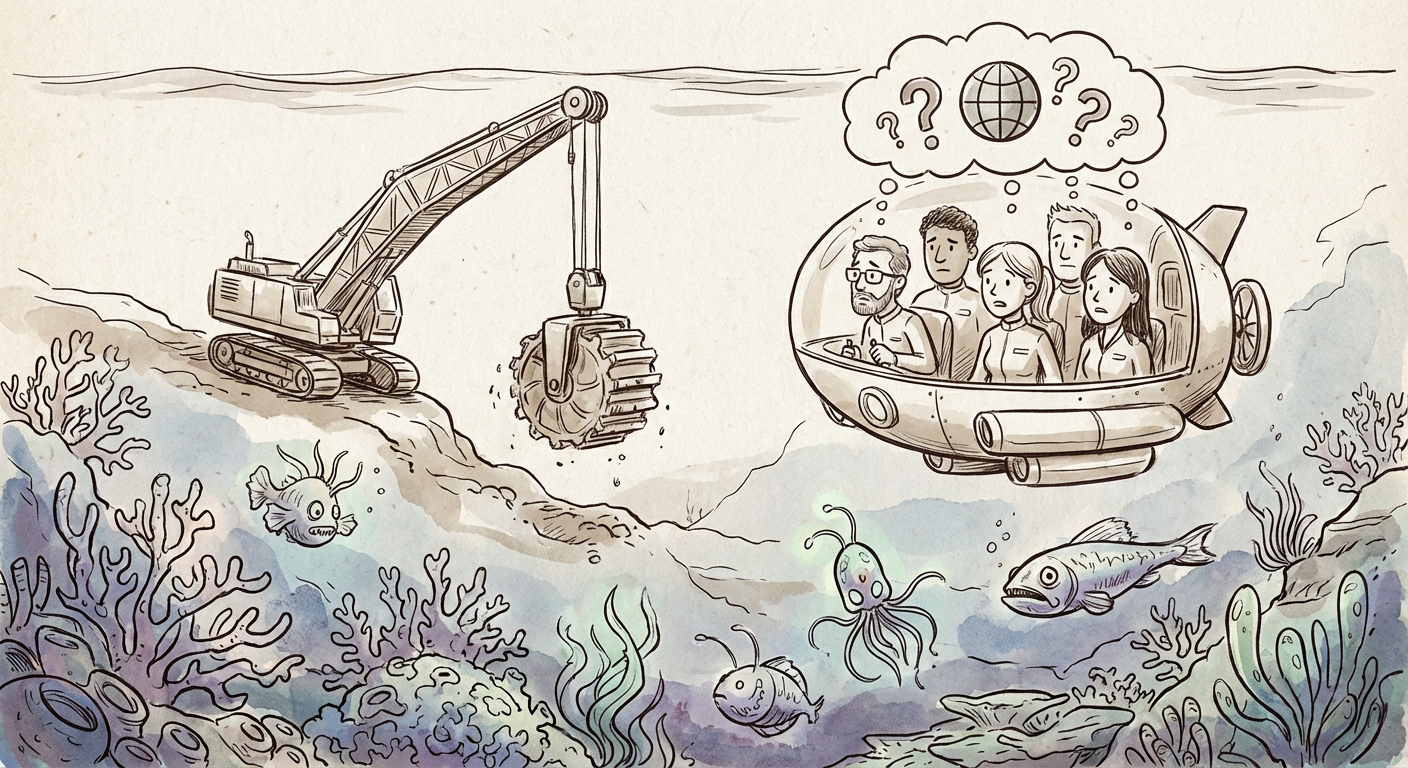
Simultaneously, commercial interests are eyeing the deep ocean as a resource extraction frontier. Deep sea mining proposals have alarmed marine biologists globally because they involve mechanical disruption of the seafloor to harvest polymetallic nodules and rare earth elements. The economic logic is straightforward: these elements are essential for renewable energy infrastructure and electronics. The problem is that we’re proposing to industrialize ecosystems we barely understand, potentially destroying biological and geological features we haven’t even documented yet.
Think about this rationally for a moment. We know approximately one-fifth of what’s down there. We’ve identified 2,000 new species annually for at least the past decade, suggesting thousands more remain unknown. Some of these organisms produce compounds that might have pharmaceutical applications. Some represent evolutionary solutions to problems we haven’t even formulated yet. And our response to this frontier of knowledge is to decide where to dig. It’s rather like deciding to demolish libraries before we’ve finished cataloging what books they contain.
What We Know, What We Need to Know, and Why It Matters
Resources like NOAA Ocean Service provide some of the most publicly accessible information about ocean conditions and research, yet even NOAA’s comprehensive databases represent only the smallest fraction of what’s actually happening beneath the surface. The ocean regulates our climate. It produces oxygen. It absorbs carbon. It contains the majority of Earth’s biodiversity. And we’re operating on the equivalent of a weather map drawn by a cartographer who sketched the continents but left most of the interior blank.
The thing that genuinely gets me thinking at 3 AM is that this moment of discovery is still ongoing. We have autonomous vehicles now. We have genetic sequencing technology that would have seemed miraculous a decade ago. We have satellite systems that can detect ocean color changes. We finally have the tools to explore at scale. The tragic part is that we might be doing it simultaneously with the clock counting down on ecosystems we’re destabilizing through warming, acidification, and contamination.
The scale problem works both ways. The ocean is so vast that it seems incomprehensibly resilient, yet that vastness also means that even minor global changes propagate through every cubic kilometer. We’re at a strange inflection point where technology has finally enabled us to understand the deep ocean better, while our collective behavior creates an accelerating deadline for doing so. If you’re interested in this intersection of discovery and preservation, read what the ocean scientists are actually publishing right now. The frontier is open, and unlike exploration in previous centuries, this one still has time to make a difference in how the story concludes.